
Mastering a modern digital dentistry workflow is no longer just about upgrading equipment; it’s a complete transformation of how dental practices and labs operate. By replacing manual, time-intensive steps with connected digital systems, dental professionals can achieve new levels of accuracy, efficiency, and patient satisfaction.
This guide breaks down the core components of a modern digital workflow and highlights how integrating advanced technology, including Artificial Intelligence, is shaping the future of patient care.
1. Defining the Digital Shift: From Analog to Integrated
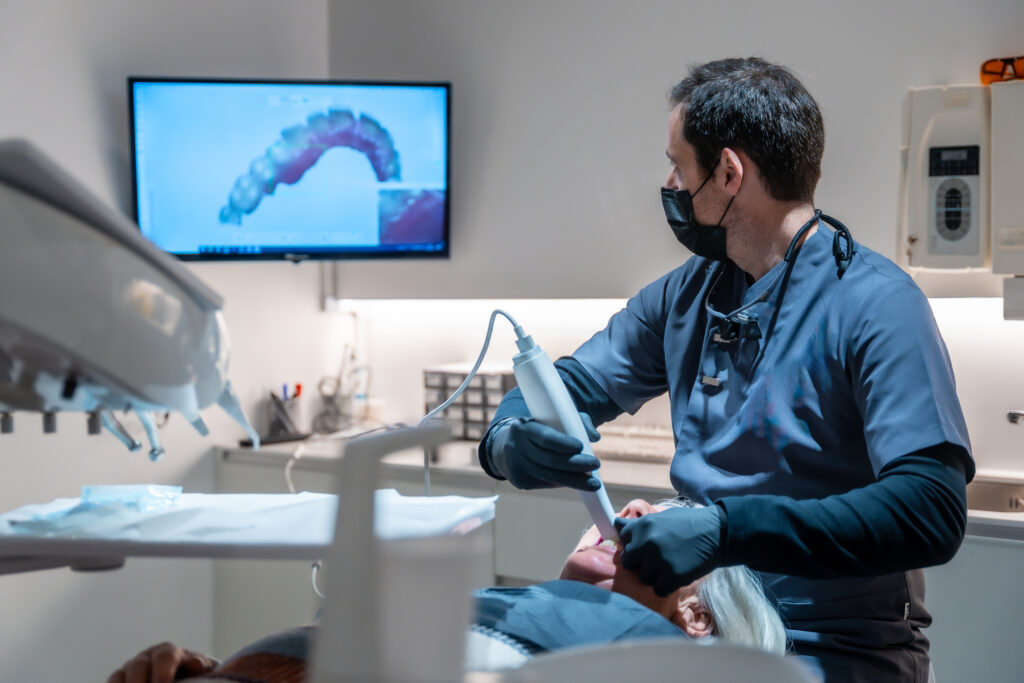
Digital dentistry refers to any computer-based technology—hardware or software—used to support diagnosis, treatment planning, and restoration fabrication. At the heart of it all is CAD/CAM (Computer-Aided Design and Manufacturing), which connects data capture directly to production.
The Core Digital Workflow
No matter what the clinical case, every digital workflow follows three main steps:
| Step | Core Activity | Key Technology | Output |
| 1. Data Acquisition | Capturing the patient’s oral anatomy. | Intraoral Scanners (IOS), Desktop Scanners, CBCT. | Highly accurate 3D file (often STL format). |
| 2. Treatment Planning & Design | Virtual design of the appliance or restoration. | Dental CAD/CAM software (e.g., Smile Design, Orthodontic, Implant Planning). | Digital blueprint for manufacturing. |
| 3. Manufacturing & Delivery | Production of the final restoration or appliance. | 3D Printing or CNC Milling Machines. | Final restoration, appliance, or surgical guide. |
Why Digitize the Workflow?
Digital workflows improve efficiency and predictability across every step:
-
- Accuracy: Digital impressions remove distortion risks from analog materials, producing restorations with micrometer precision and fewer delivery adjustments.
-
- Speed: Eliminates time-consuming manual steps like model pouring or shipping. Appointments can be condensed from multiple visits to a single session.
-
- Collaboration: Digital files make lab communication faster and more accurate, reducing remakes and miscommunication.
-
- Patient Comfort: Scanning replaces messy impressions, creating a smoother, more comfortable experience.
2. Advanced Digital Workflows by Indication
Digital dentistry enhances outcomes across all major specialties:
-
- Restorative Dentistry: Digital crown workflows allow instant file transfers to the lab—or full chairside production for practices with milling units—using a completely model-free process.
-
- Implantology: By merging IOS and CBCT data, clinicians can perform prosthetic-driven implant planning. The resulting surgical guide is 3D printed with precision, improving accuracy, and minimizing invasiveness.
-
- Digital Dentures & Prosthetics: Digital scanning and automated CAD design reduce visits and deliver highly consistent, repeatable fits.
-
- Orthodontics & Clear Aligners: Full-arch scans enable virtual treatment planning and tooth movement simulations, dramatically speeding up appliance delivery.
-
- Digital Smile Design (DSD): By combining digital scans and photos, clinicians can visualize and plan a patient’s ideal smile before fabrication, ensuring superior aesthetic results.
3. The Power of Artificial Intelligence (AI) in the Digital Workflow
AI is transforming digital dentistry by turning raw scans and imaging data into actionable insights. It enhances both diagnosis and design, making workflows faster and more precise.
| AI Function | Description | Clinical Impact |
| Real-Time Scan Correction | AI automatically removes excess soft tissue and fills data gaps during scanning. | Saves chair time and produces lab-ready files instantly. |
| Augmented Diagnosis | AI interprets X-rays and CBCT scans to flag subtle issues like early caries, apical lesions, or bone loss. | Acts as a second opinion, improving diagnostic accuracy and reducing missed pathology. |
| Automated Planning & Design | AI preps design elements such as tooth segmentation, crown margins, or insertion paths. | Cuts design time dramatically, freeing up clinicians for final artistic refinement. |
| Virtual Outcome Simulation | AI predicts likely treatment results using large datasets from past successful cases. | Improves patient understanding and boosts treatment acceptance rates. |
4. The CAD/CAM Ecosystem and Open Systems
A successful digital setup depends on seamless communication between the clinic, lab, and specialists.
Open vs. Closed Systems
When investing in digital tools, system compatibility matters:
-
- Closed Systems: Lock users into a single manufacturer’s ecosystem.
-
- Open or Partially Open Systems: Use standard file formats (STL, OBJ, PLY), allowing flexibility across platforms and labs.
For Sevāredent members, open architecture is key. It allows clinicians to choose the best tools from different vendors and collaborate freely with any lab, maximizing value and return on investment.
Conclusion
The future of dentistry is fully digital—and increasingly powered by AI. Digital workflows deliver better accuracy, faster turnaround times, and a smoother patient experience.
By embracing a connected digital approach—from precise intraoral scanning to CAD/CAM collaboration and AI-driven insight—dental professionals can build a more efficient, predictable, and profitable practice for the modern era.
Want to see how Sevāredent helps DSOs access the latest dental technology at GPO pricing?
Contact Our Team →Learn how Sevāredent's clinically integrated sourcing approach works for DSOs.
Explore Our Sourcing Approach →